Comparison
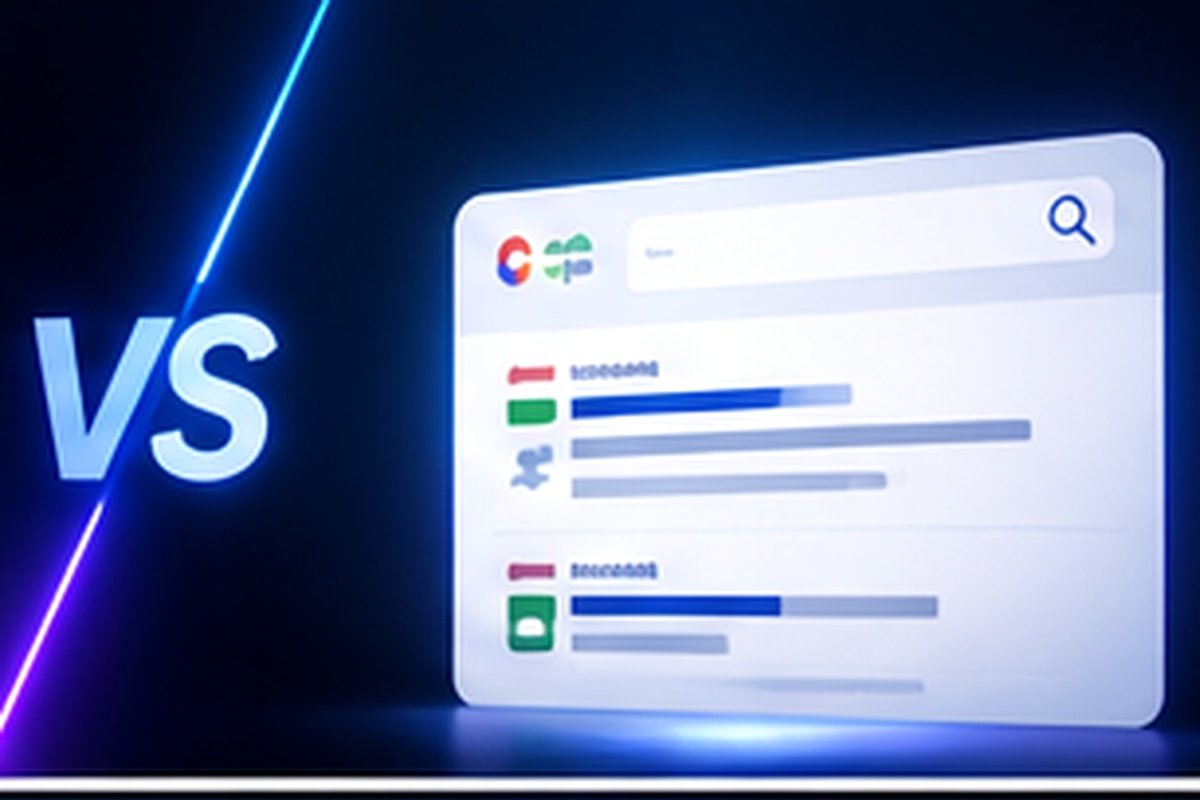
AI Search vs. Traditional Search: What Advertisers Need to Know
AI search and traditional search increasingly sit side by side, sometimes on the same results page. This article breaks down the practical differences that matter for advertisers - not the philosophy, the mechanics.
The query itself looks different
Traditional search rewards a short, keyword-shaped query - “best running shoes flat feet.” AI search and assistant-style search accept, and increasingly encourage, a full description of the situation - budget, constraints, prior attempts, preferences. That richer input gives the system more to match against, which is also why generic, thin content tends to perform worse: there's more surface area for a vague page to fail to match a specific need.
The result is a synthesized answer, not just a ranked list
Traditional search returns a ranked list of links for the user to evaluate. AI search returns a direct, synthesised answer, often with citations, and may only reference a handful of sources rather than the full page-one field. Being in the citation set matters more than being technically indexed; that's a materially different bar to clear than a page-one ranking.
What carries over from traditional SEO
Fast, mobile-friendly, well-structured pages still matter. Authoritative backlinks and genuine expertise still matter. Traditional SEO fundamentals are not obsolete - they remain a large part of how both systems judge trustworthiness. What's added on top is a stronger reward for direct-answer formatting, structured data, and consistency across third-party sources, as covered in our guide to getting recommended by AI.
What it means for advertising specifically
For paid placements, the implication is similar to organic: a sponsored result inside an AI-search answer is being matched against a fuller description of intent, which raises the value of precise landing pages and honest, specific offers over broad, generic ad copy. Expect measurement to lean more on assisted conversions and brand lift alongside last-click, since some of the research happens inside the answer itself, off a page you can directly instrument.
Frequently asked questions
Is AI search replacing traditional search?
Not outright - both are used, sometimes on the same results page, and traditional keyword search remains extremely widely used. Plan for both rather than choosing one.
Do I need different content for AI search?
You need the same fundamentals done well, plus content that states a direct answer plainly near the top of the page and is backed by structured data - both of which also help traditional SEO.
How do I measure performance in AI search specifically?
Direct instrumentation is limited today. Track proxies: branded search volume, direct traffic, and post-purchase 'how did you hear about us' data, alongside whatever citation or referral data a given platform exposes.